The best way to visit a Maya community in Quintana Roo is through community-based tourism: experiences that local people design, run and earn from, usually through a cooperative. You book with them (or with a partner that pays them fairly), you follow their rules, and you treat the visit as an invitation into a place where people live and work, not as a show put on for you.
Quintana Roo is a good place to do this. Outside the coast, Maya is still an everyday language in many towns. In the state as a whole, about 14 percent of people over age three speak an Indigenous language, and Maya is the most widely spoken. In the central municipality of Felipe Carrillo Puerto, the share is nearly 60 percent. This guide explains what community tourism looks like here, where to find it, and how to be a guest people are glad to host.
What is community-based tourism?
In community-based tourism, the community itself owns and manages the experience. Usually that means a local cooperative of families who guide, cook, paddle the boats and run the lodging, and who decide together what visitors can and cannot see. Profits stay in the village instead of going mainly to outside operators.
This matters because mass tourism on the coast has brought jobs but also pressure on land, water and culture. Community tourism is one way rural Maya towns earn income while keeping control over their land, their forest and how their culture is presented.
In March 2026, Mexico's federal government signed a declaration recognizing community tourism as a matter of national interest, in the town of Tihosuco, in the Maya Zone of Quintana Roo. The UN Development Programme in Mexico noted that the Maya Ka'an destination was among the first three Community Tourism Destinations named under the new framework.
Where can you find community tourism in Quintana Roo?
Maya Ka'an
The best-known example is Maya Ka'an, a community tourism destination in the center of the state, around Felipe Carrillo Puerto and José María Morelos and next to the Sian Ka'an Biosphere Reserve. It was launched in 2014 with support from the conservation group Amigos de Sian Ka'an and others, to help organize and strengthen local tourism cooperatives. Officials describe the region as covering nearly one million hectares and 76 localities.
Cooperatives in the network have included, among others:
- Community Tours Sian Ka'an, in Muyil, which runs tours inside the Sian Ka'an Biosphere Reserve
- Xyaat, in the village of Señor
- U-Belilek, in Tihosuco, a town tied to the history of the 19th-century Caste War
- Kiich Pam Kaax, in Chunhuhub
- Balam Nah and Sijil Noh Já, on the Ocom Lagoon
- Lool Chuy, in Xpichil
- Community experiences in Punta Allen, the fishing village inside Sian Ka'an
Depending on the place, visits can include cenotes, caves, lagoons, jungle walks, colonial-era churches and time with families who share their traditions. Look for the Maya Ka'an name when you search, and contact the cooperatives directly or through partners that work with them.
Closer to Cancún
Maya communities are not only in the south. The Ruta de los Cenotes, where our park is, runs for more than 27 km from Puerto Morelos inland to Leona Vicario, which Mexico's National Institute of Indigenous Peoples recognized as a Maya Indigenous community in 2025. Organized community tourism here is less developed than in Maya Ka'an, so the respectful-visitor habits below matter just as much as which tour you book.
What does a typical community visit include?
Every cooperative is different, but a day visit often includes some of the following:
- A welcome and an introduction to the community and its history, in Spanish or Maya with translation
- A guided walk through the forest, the milpa (the traditional cornfield mixing maize, beans and squash) or a medicinal plant garden
- A swim or float in a cenote, lagoon or canal
- A homemade meal, often cooked in a traditional kitchen
- Demonstrations of crafts, beekeeping, or other local work, with a chance to buy directly from the makers
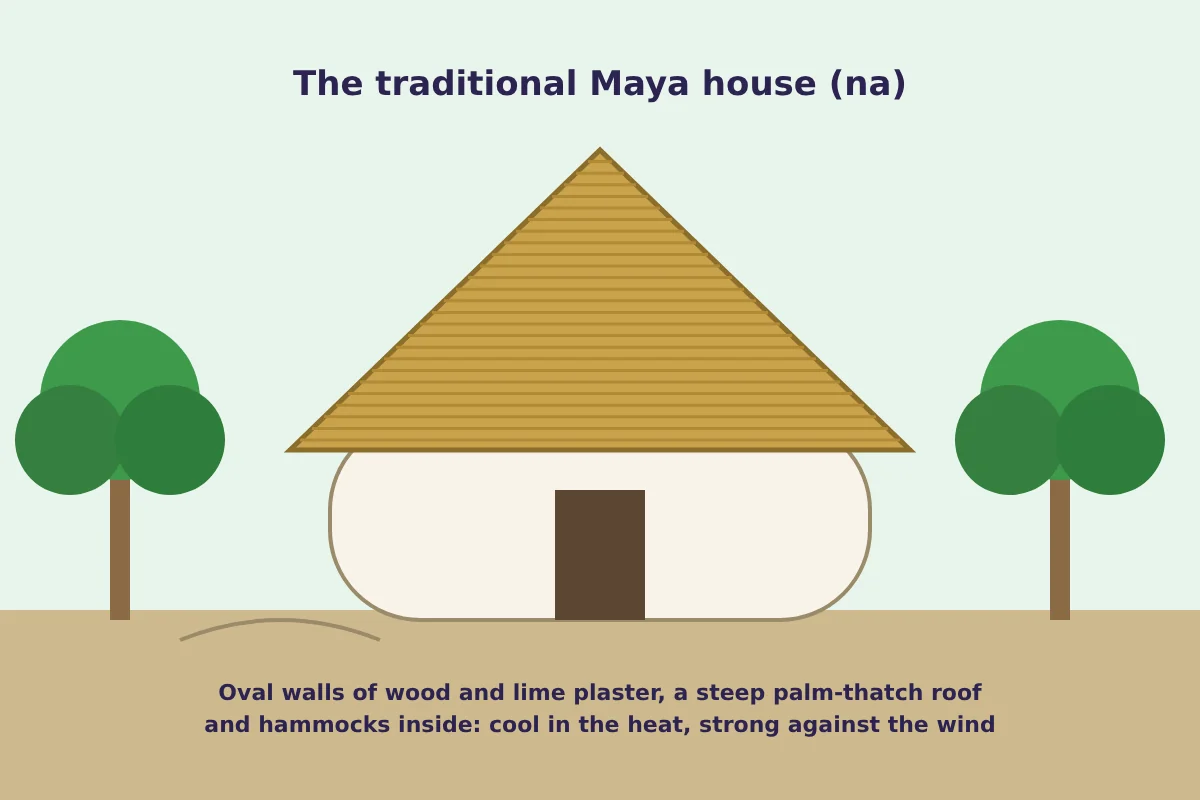
You may also see the traditional Maya house, called na (or naj) in Yucatec Maya. It is oval, with walls of bajareque (a woven frame of sticks packed with earth) and a tall, steep roof thatched with leaves of the huano palm, which Maya speakers call xa'an. According to Yucatán Today, a single roof can use about 4,000 palm leaves. Two doors face each other in the middle of the long sides, letting the breeze pass through, and hammocks hang from the main beams. The design stays cool in the heat and stands up well to storms.
How do you visit a Maya community respectfully?
Ask before you take photos
Always ask before photographing people, their homes or ceremonies, and accept a "no" gracefully. A simple "¿Puedo tomar una foto?" (Can I take a photo?) goes a long way. Be especially careful with children and with anything religious.
Remember that homes are not attractions
Don't wander into yards or peer through doorways. A family's house, kitchen and garden are private unless your hosts invite you in. Follow your guide, stay on the paths they show you, and don't touch altars or offerings.
Buy direct and pay fairly
Buying crafts, honey or food directly from the people who make them is one of the most useful things you can do. Prices are usually fair, so don't bargain hard. If something seems inexpensive to you, remember that it may represent days of work. For handicrafts worth bringing home, see our guide to authentic souvenirs from Cancún.
Tip the people who host you
Tips for local guides, cooks and boat operators are appreciated. Give them directly to the person and, if you can, in Mexican pesos. Our tipping guide for Cancún explains common amounts.
Learn a few words
Many people in rural Quintana Roo speak Maya as their first language and Spanish as their second. Even a simple greeting in Maya is often met with a smile. Our list of Yucatec Maya words and phrases is a good place to start, along with a few Spanish phrases for Cancún.
Dress and act with care
Wear modest clothing in villages, keep your voice down, and ask your guide about local customs before visiting a church or ceremony. Take your trash with you and use only biodegradable sunscreen in cenotes and lagoons.
How do you tell genuine community tourism from a staged one?
A few questions help:
- Who owns it? Ask whether the experience is run by a local cooperative or ejido (communal landholding), or by an outside company.
- Who guides? Local guides who live in the community are a good sign.
- Where does the money go? Genuine projects are usually happy to explain how income is shared.
- Does it feel staged? Real community tourism shows daily life and work as people choose to share it. Be cautious of "authentic Maya village" stops where people perform for tour buses with little say in how they are presented.
Combining a community visit with your Cancún trip
Maya Ka'an is a long drive from Cancún, so it works best as an overnight trip or as part of a stay in Tulum or Bacalar. Our guide to day trips from Cancún helps you compare driving times.
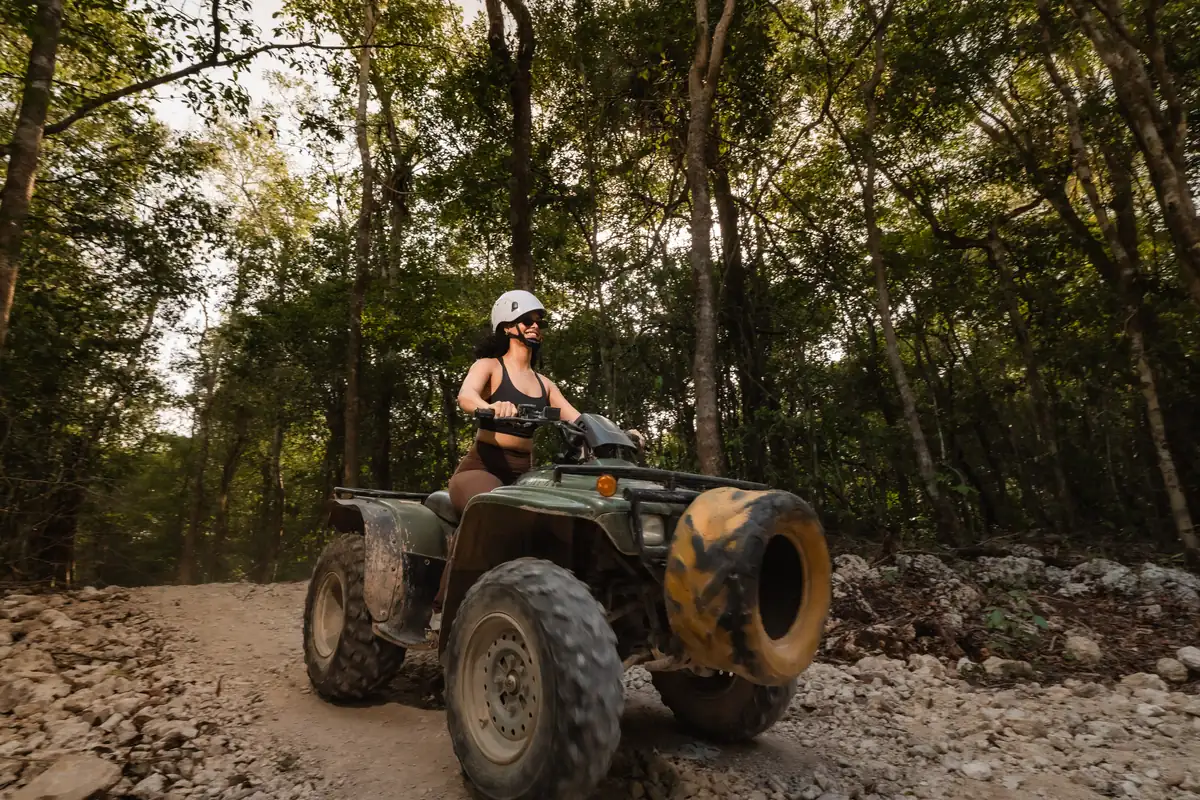
If you only have half a day, the jungle along the Ruta de los Cenotes is the closest place to the city to see the forest that so much of Maya life depends on. Our tours there include a cenote swim and a Maya snack along with ziplines, ATVs or horseback riding, with hotel pickup from Cancún and Puerto Morelos. You can compare them on our tours page.
Frequently asked questions
Is it okay to visit Maya villages as a tourist?
Yes, especially when you go through a community-run cooperative that has chosen to receive visitors. Follow your hosts' rules, ask before taking photos and buy directly from local people.
What is Maya Ka'an?
It is a community-based tourism destination in central Quintana Roo, launched in 2014, where Maya cooperatives near the Sian Ka'an Biosphere Reserve offer tours, food and cultural experiences.
Do people in Quintana Roo still speak Maya?
Yes. Maya is the most widely spoken Indigenous language in the state, and in municipalities such as Felipe Carrillo Puerto most people speak it.
Should I tip on a community tour?
Tips for guides, cooks and boat operators are appreciated. Give them directly to the person, ideally in pesos.
Explore the jungle near Cancún
ATV, ziplines, a cenote swim and a tequila tasting on the Ruta de los Cenotes, with pickup from Cancún.
See All ToursSources
- Mayaka'an: Mexico community ecotourism destination – Sustainable Travel International
- PNUD reconoce a Maya Ka'an como Destino de Turismo Comunitario – UNDP Mexico
- Se firma en Tihosuco declaratoria de interés público del turismo comunitario – La Crónica
- Quintana Roo showcases 8 community tourism experiences – Riviera Maya News
- En Quintana Roo, más del 14% de la población habla una lengua indígena – Ruptura 360
- The traditional Maya house – Yucatán Today