You can get by in Cancún's Hotel Zone with English, but a few dozen Spanish phrases make a real difference once you're in a downtown taquería, a market, a taxi or a jungle tour. The most useful ones are simple: buenos días, por favor, gracias, la cuenta, por favor and ¿cuánto cuesta? Add a few Mexican expressions like ¿mande? and ahorita, and you'll understand much more of what's going on around you.
This guide covers Mexican Spanish, the language most people in Cancún use day to day. Many locals also speak Yucatec Maya; for that, see our separate guide to Yucatec Maya words and phrases.
How do you pronounce Spanish words?
Spanish is spelled almost exactly as it sounds, which helps a lot. A few rules cover most words:
- Vowels are short and clean: a as in "father," e as in "bet," i as in "machine," o as in "more," u as in "rule."
- H is silent: hola sounds like "OH-lah."
- J sounds like a strong English h: jugo (juice) is "HOO-go."
- Ll and y sound like the English y in most of Mexico: pollo (chicken) is "POH-yo."
- Ñ is like "ny" in "canyon": mañana is "mah-NYAH-nah."
- R is a quick tap; rr is rolled.
- X changes. In México it sounds like a Spanish j. In Maya place names, like Xcaret or Xel-Há, it sounds like "sh."
- Accent marks show which syllable to stress: café is "ka-FEH."
Don't worry about getting it perfect. People appreciate the effort.
Greetings and polite basics
In Mexico it's polite to greet people before you ask for anything, even in a shop or taxi.
- Buenos días – Good morning (until around noon)
- Buenas tardes – Good afternoon (until it gets dark)
- Buenas noches – Good evening / good night
- Hola – Hi
- Por favor – Please
- Gracias / Muchas gracias – Thank you / Thank you very much
- De nada – You're welcome
- Con permiso – Excuse me (to pass someone or leave)
- Perdón / Disculpe – Sorry / Excuse me (to get attention)
- No hablo mucho español – I don't speak much Spanish
- ¿Habla inglés? – Do you speak English?
- ¿Puede hablar más despacio? – Can you speak more slowly?
Tú or usted?
Spanish has two ways to say "you." Tú is informal, for friends and kids. Usted is polite, for adults you don't know, older people and anyone serving you. When in doubt, use usted; you can't go wrong with it. Most phrases in this guide use the usted form.
Phrases for restaurants
- Una mesa para dos, por favor – A table for two, please
- ¿Me trae la carta / el menú? – Could you bring the menu?
- Quisiera... – I would like...
- ¿Qué me recomienda? – What do you recommend?
- ¿Pica? – Is it spicy?
- Sin picante, por favor – Not spicy, please
- Sin hielo – Without ice
- Agua natural / agua mineral – Still water / sparkling water
- Soy alérgico (alérgica) a... – I'm allergic to...
- La cuenta, por favor – The check, please
- ¿Aceptan tarjeta? – Do you take cards?
- ¡Provecho! – Enjoy your meal (people say it to others who are eating)
In Mexico the server usually won't bring the check until you ask for it, so don't wait for it to appear. If you want to add a tip on a card, you can say "con el quince por ciento de propina" (with a 15% tip). Our Cancún tipping guide explains how much is typical. For what to order, see our Yucatán food guide.
Shopping and bargaining at markets
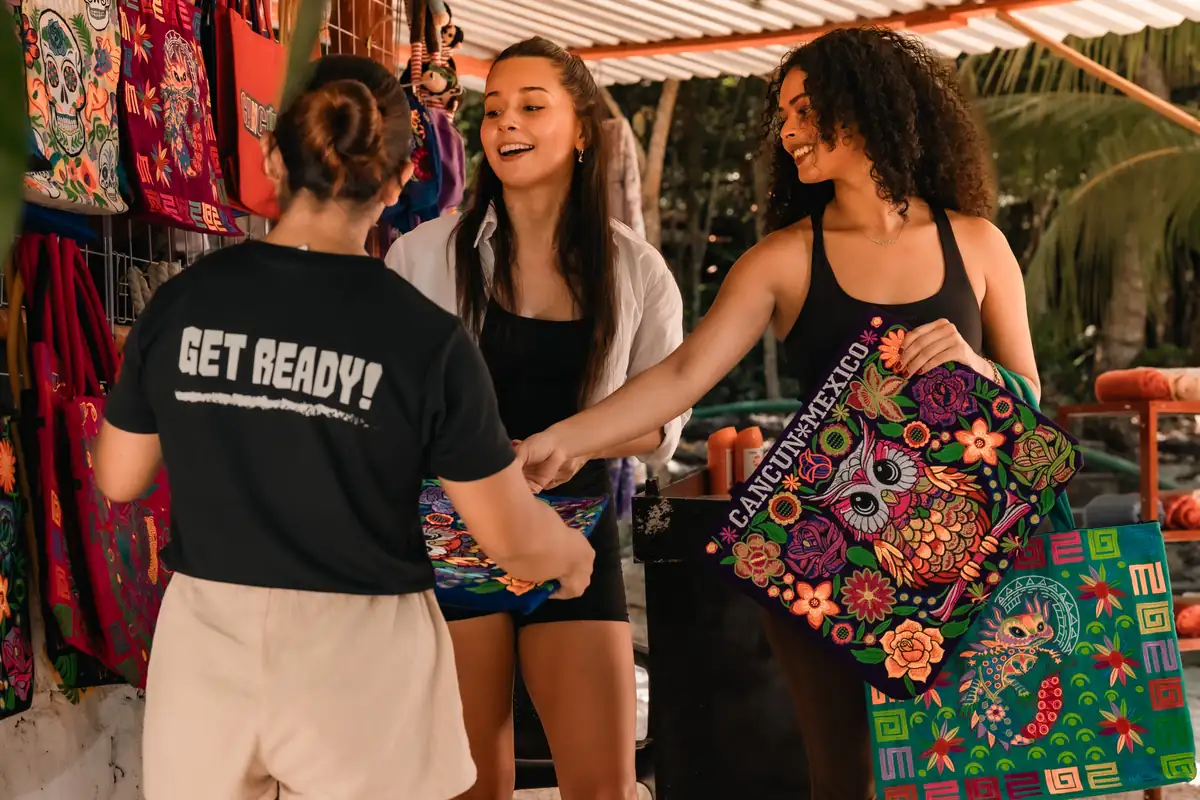
At craft markets like Mercado 28, polite bargaining is common. In supermarkets, malls and shops with price tags, it isn't.
- ¿Cuánto cuesta? – How much is it?
- ¿Cuánto cuestan los dos? – How much for both?
- ¿Me hace un descuento? – Can you give me a discount?
- Es mucho – That's a lot
- Solo estoy viendo, gracias – I'm just looking, thanks
- ¿Es hecho a mano? – Is it handmade?
- ¿De dónde es? – Where is it from?
- Me lo llevo – I'll take it
A simple "No, gracias" with a smile is enough to decline a vendor. For what's worth buying, see our guide to authentic souvenirs in Cancún.
Taxis and directions
- ¿Cuánto cuesta a...? – How much to...?
- Lléveme a este hotel, por favor – Take me to this hotel, please
- Aquí está bien – Here is fine
- A la derecha / a la izquierda – To the right / to the left
- Todo derecho – Straight ahead
- ¿Dónde está...? – Where is...?
- ¿Dónde está el baño? – Where's the restroom?
- ¿Está lejos / cerca? – Is it far / close?
Agree on the fare before you get in. It also helps to have your hotel's name and address written down.
On a cenote or jungle tour
- ¿Qué tan profundo es? – How deep is it?
- ¿Hay chalecos salvavidas? – Are there life jackets?
- No sé nadar – I can't swim
- ¿Dónde están los vestidores / las regaderas? – Where are the changing rooms / showers?
- ¿Puedo tomar fotos? – Can I take photos?
- Tengo miedo – I'm scared (useful before your first zipline)
- Más despacio, por favor – Slower, please
- ¡Qué padre! – How cool!
Guides on most tours around Cancún speak English, but they'll enjoy hearing you try. Our article on preparing for a cenote swim covers what to bring.
Emergencies and health
The national emergency number in Mexico is 911.
- ¡Ayuda! / ¡Auxilio! – Help!
- Necesito un médico – I need a doctor
- Llame a una ambulancia – Call an ambulance
- ¿Dónde hay una farmacia? – Where is a pharmacy?
- Me siento mal – I feel sick
- Me duele aquí – It hurts here
- Perdí mi pasaporte – I lost my passport
- Me robaron – I was robbed
Mexican words you'll hear in Cancún
These are everyday expressions that don't always appear in phrasebooks:
- ¿Mande? – A polite "Sorry?" or "Yes?" when someone didn't hear you or is answering a call for their attention. Very Mexican, and very courteous.
- Ahorita – Literally "right now," but it often means "in a little while," sometimes much longer. If someone says ahorita vengo, they'll be back at some point soon. Ahoritita is the more urgent version.
- ¡Aguas! – "Watch out!" You'll hear it before something falls, splashes or when a car is coming.
- Padre / qué padre – Cool, great. Padrísimo is even better.
- Chido – Also "cool" or "nice," a bit more casual.
- Güey (also spelled wey) – Roughly "dude." Friends use it constantly with each other, but depending on tone it can also be an insult. It's best to recognize it rather than use it with people you don't know.
- Órale – Can mean "OK," "wow" or "let's go," depending on tone.
- ¿Qué onda? – What's up?
- ¿Bueno? – How Mexicans answer the phone.
- Provecho – Said to people who are eating.
Practice your Spanish on a jungle day trip
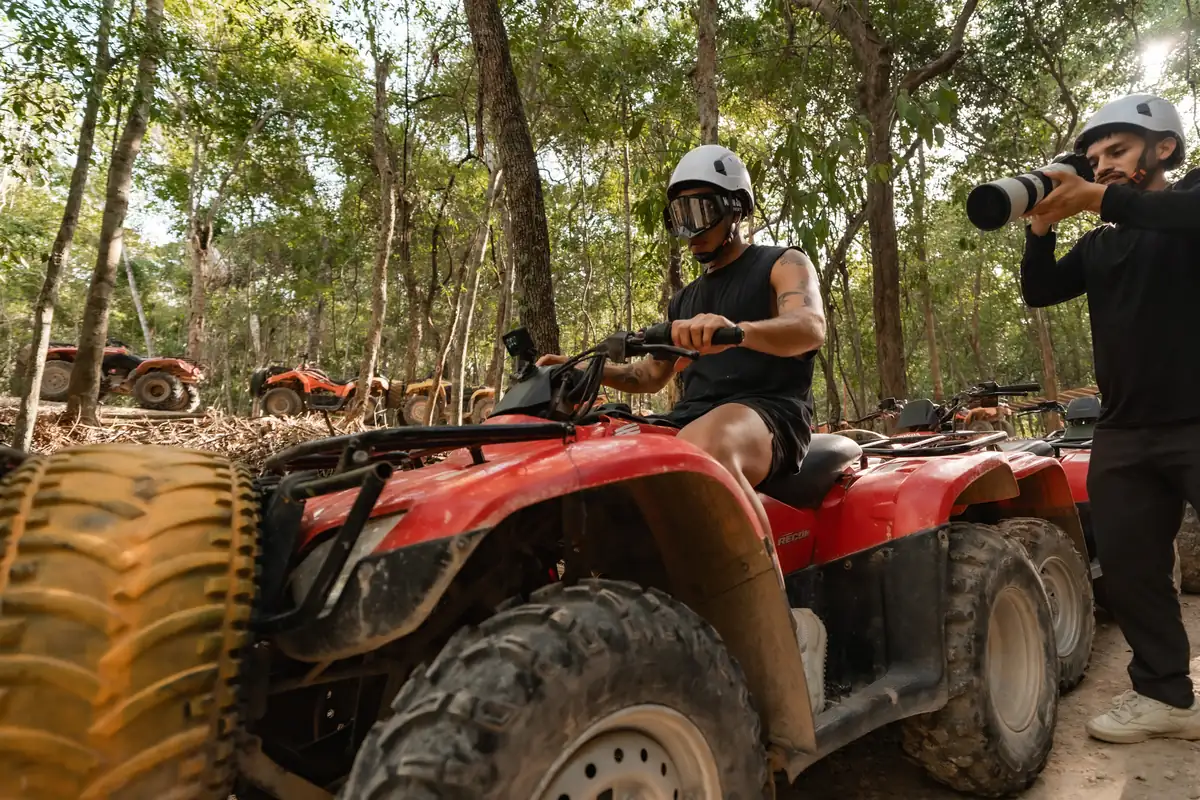
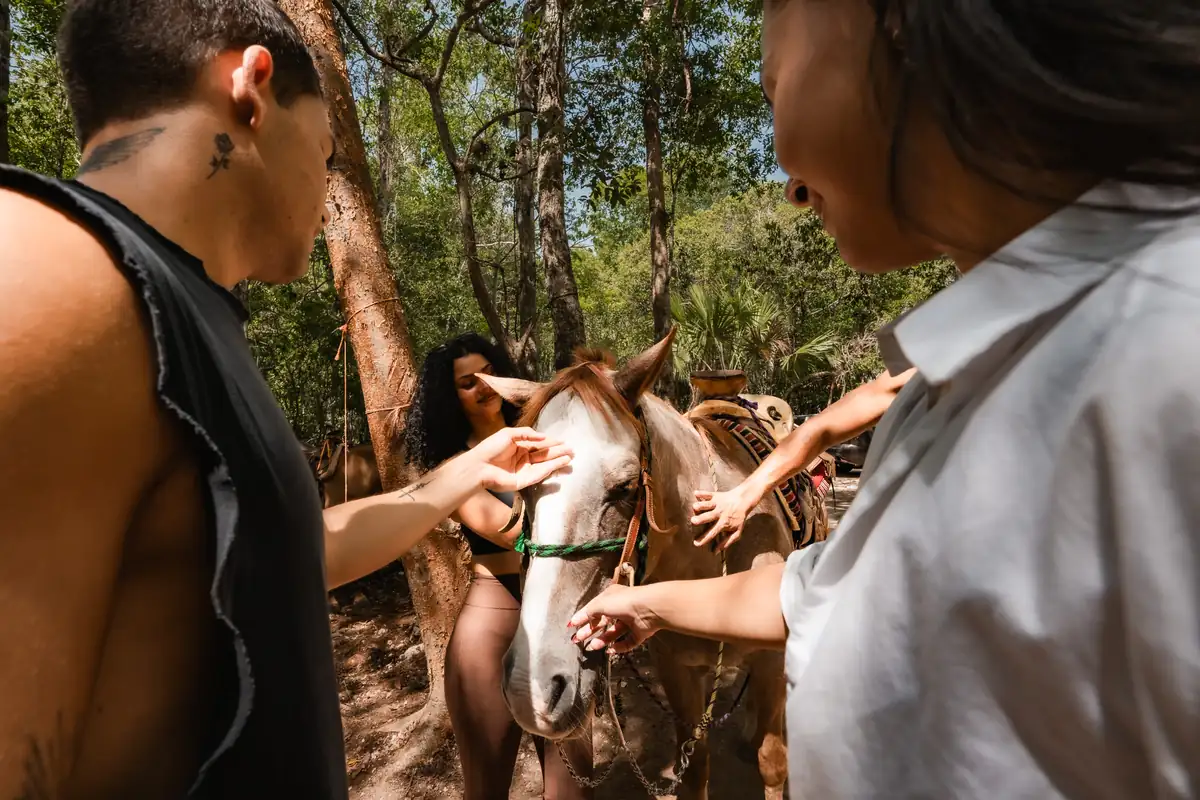
The Ruta de los Cenotes near Puerto Morelos is a good place to try a few phrases, since you'll meet local guides, drivers and staff along the way. Our tours combine ATVs or horseback riding, ziplines and a cenote swim, and include hotel pickup from Cancún and Puerto Morelos. See the options on our tours page.
Frequently asked questions
Do I need to speak Spanish in Cancún?
No. Most people working in hotels, restaurants and tours in the Hotel Zone speak English. Basic Spanish is helpful downtown, in markets, taxis and smaller towns, and it's always appreciated.
What does "mande" mean in Mexico?
¿Mande? is a polite way to say "Pardon?" or "Yes?" when you didn't hear something or someone calls you. It's typical of Mexican Spanish.
Is it rude to say "güey"?
Among friends it's a casual "dude," but it can be rude or insulting depending on tone and context. Visitors are better off not using it with strangers.
What is the emergency number in Mexico?
Dial 911, Mexico's national emergency line, available 24 hours a day for medical, safety and civil protection emergencies.
Explore the jungle near Cancún
ATV, ziplines, a cenote swim and a tequila tasting on the Ruta de los Cenotes, with pickup from Cancún.
See All Tours