The most authentic souvenirs from Cancún are things made in the Yucatán Peninsula itself: a hand-woven hammock, an embroidered huipil or guayabera, Melipona honey, Xtabentún liqueur or natural chicle gum. Mexico-wide classics like tequila, silver and Talavera are also good buys, as long as you know the marks that separate the real thing from imitations.
Cancún's markets mix genuine craftwork with mass-produced items, some of them imported. The checks below take a minute and will help you spend your money on the real thing, and on the people who make it.
What souvenirs are actually from the Yucatán?
Some of the best things you can bring home come from the three states of the peninsula (Quintana Roo, Yucatán and Campeche):
- Hammocks from Yucatán's weaving towns
- Huipiles and ternos, the embroidered dresses of Maya women
- Guayaberas, the pleated shirts strongly associated with Yucatán
- Melipona honey, from the native stingless bee
- Xtabentún, an anise and honey liqueur
- Natural chicle gum from Quintana Roo cooperatives
Other Mexican crafts sold in Cancún, like Talavera pottery or Oaxacan alebrijes, are real Mexican art, but they come from other regions. They're still worth buying; just know where they're from.
How do you choose a good Yucatán hammock?
The hammock is the Yucatán's signature craft, and in the region it's still a bed, not just something for the porch. Tixkokob, a town near Mérida, is known as a center of hammock weaving, and hammocks are made by hand in many other Yucatán villages too.
Traditional Maya hammocks were woven from plant fibers, later sisal and cotton. Today most are cotton or nylon:
- Cotton is softer and more comfortable, but colors fade faster.
- Nylon dries quickly and holds up well in humid climates.
Sizes are usually sold as sencilla (single, a snug fit for one), doble (roomy for one), and matrimonial (for two), with larger family sizes too. Choose bigger than you think: you lie diagonally in a Yucatán hammock, and extra width is what makes it comfortable.
To judge quality, look for a dense, even weave with thin threads; tighter weaves take longer to make and last longer. If you can, lie in it before you buy.
Embroidered huipiles, ternos and guayaberas
The huipil (also spelled hipil) is the traditional dress of Maya women in Yucatán: a white cotton dress with colorful flowers embroidered around the neck and hem. The terno is a more elaborate, festive version worn for celebrations and dances.
Yucatán embroidery has its own techniques, including xmanikté and xookbil chuuy (counted cross-stitch). There is also skilled embroidery done on pedal sewing machines, which is a traditional craft in its own right, plus cheap digital machine embroidery that is not.
How to tell the difference:
- Hand embroidery usually shows small irregularities from stitch to stitch.
- Digital machine embroidery looks perfectly uniform and repeats exactly.
- Price is a clue: a fully hand-embroidered huipil takes many hours of work, so it can't be cheap.
- When in doubt, ask the seller how it was made, or buy from a workshop or cooperative.
The guayabera is a light cotton or linen shirt with vertical pleats and pockets, worn in Yucatán for weddings and formal events. Its origin is debated; Cuba is the most common claim, but Yucatán adopted and refined it. Tekit, in Yucatán, is a major production center.
Food and drink: what to buy and what to check
Melipona honey and Xtabentún
Honey from the Melipona stingless bee, kept by Maya beekeepers for centuries, is a uniquely regional gift, and because these small bees make far less honey than European honeybees, a real jar is never cheap. Read more in our article on Melipona bees.
Xtabentún is a liqueur made with anise and honey, traditionally linked to the Xtabentún flower. Our Xtabentún guide explains its history.
Vanilla: buy real, avoid cheap bottles
Vanilla is native to Mexico, and Vainilla de Papantla from Veracruz and Puebla has a protected appellation of origin since 2009. But cheap "Mexican vanilla" sold in big bottles at low prices is often not vanilla at all.
The US Food and Drug Administration has warned that some vanilla products from Mexico contain coumarin, extracted from tonka beans, which is banned in food in the US. Coumarin is related to blood-thinning drugs and is a particular risk for people on blood thinners. To be safe:
- Avoid very cheap large bottles, whatever the label says.
- Buy whole vanilla beans or extract from a reputable shop.
- Read the ingredients for "cumarina" or tonka.
Tequila and mezcal: look for the NOM
Real tequila and mezcal carry a NOM number on the label, which identifies the certified producer or bottler. It's a mark of authenticity, not of quality, so also look for "100% de agave" if you want tequila made only from agave. Our tequila vs mezcal guide explains the difference.
Silver, Talavera and alebrijes: what to know
Mexican silver
Look for 925 stamped on the piece (92.5% silver, or sterling), often with "Mexico" and a maker's code. Since around 1980, Mexican silver has used a letter-and-number code where the first letter shows the town (T for Taxco, for example) and the number identifies the registered maker. Taxco, in Guerrero, is Mexico's best-known silver town.
Be wary of alpaca, sometimes sold as "plata alemana" (German silver). It's an alloy of copper, nickel and zinc that contains no silver at all. A missing stamp or a suspiciously low price are warning signs.
Talavera pottery
Real Talavera comes from Puebla and Tlaxcala, not the Caribbean coast. It has had a protected designation since 1997, and pieces from certified workshops carry the workshop's logo, the artist's initials and a hologram on the base. Much of the "Talavera-style" pottery sold in tourist shops isn't certified. It can still be pretty; just don't pay certified prices for it.
Alebrijes
Alebrijes, the brightly painted fantasy creatures, began in Mexico City in the papier-mâché work of artisan Pedro Linares. Carvers in Oaxaca later adapted them to copal wood, in towns like San Antonio Arrazola and San Martín Tilcajete. Genuine Oaxacan pieces are hand-carved and hand-painted, often signed, and no two are identical.
Where to shop for souvenirs in Cancún
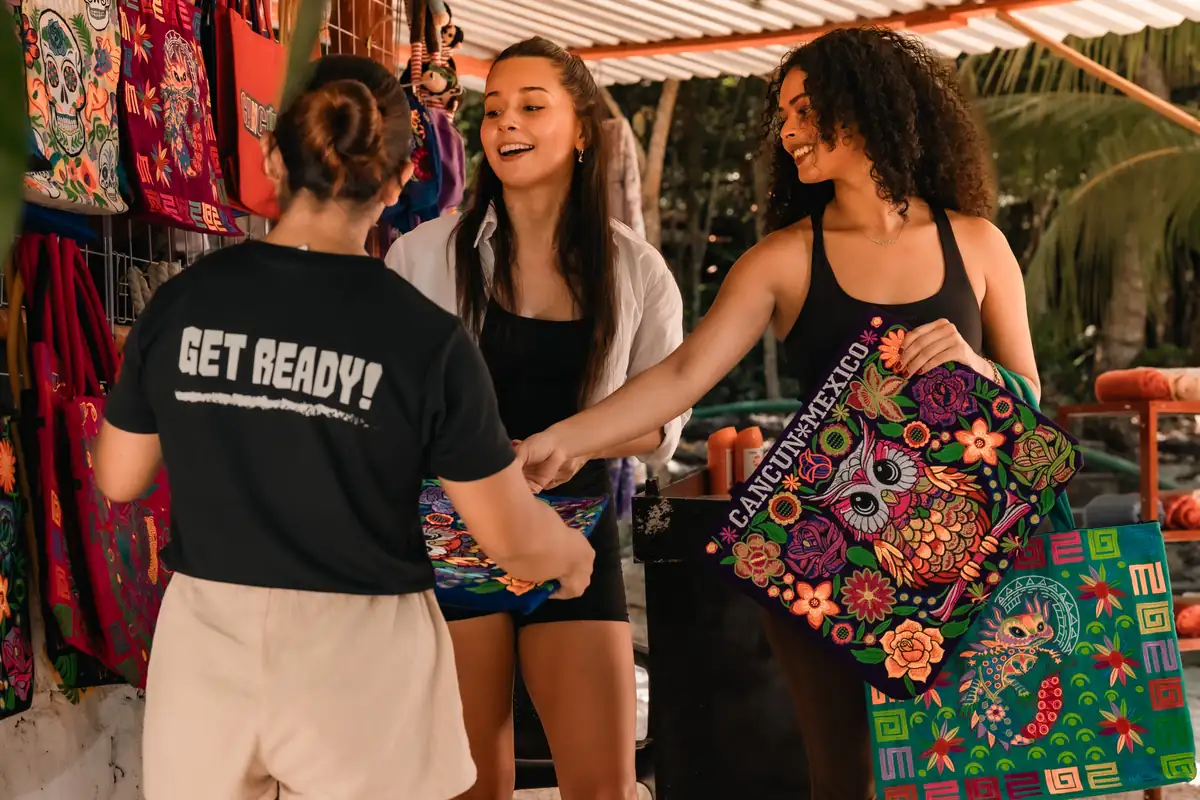
- Mercado 28, downtown, about 2 km from the Hotel Zone, is Cancún's best-known craft market. It began in the 1980s as a general market and shifted toward handicrafts in the 1990s. Bargaining politely is normal; our Spanish phrases guide has the words you need.
- Puerto Morelos has artisan shops and stalls in the town center. See our Puerto Morelos guide.
- Hotel Zone malls sell crafts too, usually at higher prices.
If you can, buy directly from the artisan or a cooperative. Ask ¿Es hecho a mano? (Is it handmade?) and ¿De dónde es? (Where is it from?). An honest seller will tell you.
A quick checklist against fakes
- Ask where it was made and by whom.
- Check the label or base for "Hecho en México" or a maker's mark.
- Look for small irregularities that show handwork.
- Check for 925 on silver, a NOM on tequila or mezcal, and a hologram on Talavera.
- Be skeptical of identical items stacked in large numbers.
- If the price seems too low for the work involved, it probably isn't what it claims to be.
Bringing souvenirs home: customs
Each country has its own limits on alcohol, food and plant or animal products. Honey, seeds, wooden items and anything made from shells, coral, feathers or animal parts may be restricted or banned. Check your country's customs rules before you buy, and keep receipts.
Find a souvenir on a jungle day
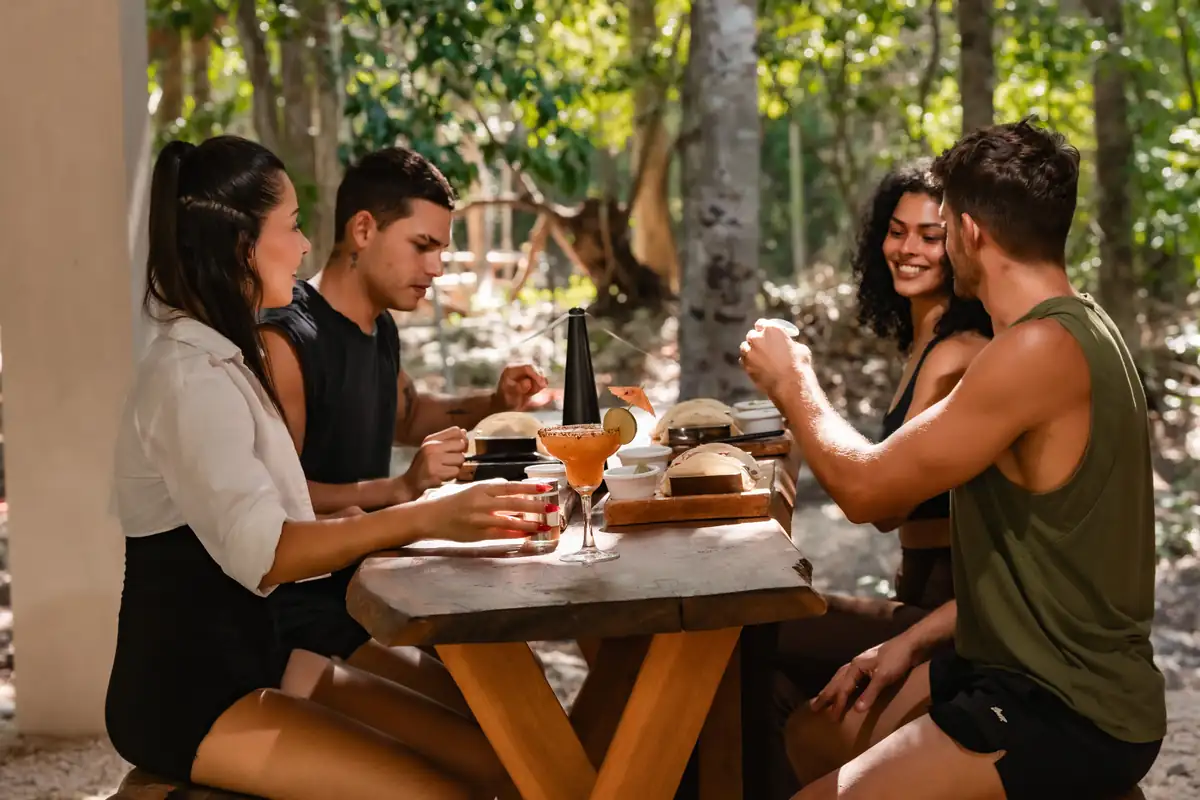
Our tours on the Ruta de los Cenotes, near Puerto Morelos, include a Maya snack and a tequila tasting, a relaxed way to learn what you like before you buy a bottle. You can compare all options on our tours page.
Frequently asked questions
What is the most traditional souvenir from Cancún?
A Yucatán hammock is the most iconic regional craft. Embroidered huipiles, guayaberas and Melipona honey are also traditional to the peninsula.
How can I tell if Mexican silver is real?
Look for a 925 stamp and a maker's code, and be cautious with very low prices. "Alpaca" or "German silver" contains no silver.
Is Mexican vanilla safe to buy?
Real vanilla extract or beans from a reputable seller are safe. Avoid cheap large bottles, which the FDA has warned can contain coumarin from tonka beans.
Is Talavera pottery made in Cancún?
No. Authentic Talavera is made in Puebla and Tlaxcala and carries certification marks from approved workshops.
Explore the jungle near Cancún
ATV, ziplines, a cenote swim and a tequila tasting on the Ruta de los Cenotes, with pickup from Cancún.
See All Tours