Cacao was not invented by the Maya, but they made it central to their culture. The plant was first domesticated in South America more than 5,000 years ago. In Mesoamerica, people were preparing cacao drinks almost 4,000 years ago, and by the first millennium BC the Maya were drinking it at feasts and ceremonies, writing its name on their pottery and using the beans as a form of money.
For most of its history, chocolate was a drink, not a candy bar: bitter, foamy and often spiced. Here is how that drink developed, how it reached Europe, what is left of it on the Yucatán Peninsula today, and how to tell a good cacao experience from marketing.
Where does cacao come from?
For a long time, researchers assumed cacao was first domesticated in Central America. A 2018 study in Nature Ecology & Evolution changed that. At Santa Ana-La Florida, a site of the Mayo-Chinchipe culture in the upper Amazon of Ecuador, scientists found three kinds of evidence in pottery: cacao starch grains, residues of theobromine (a compound found in cacao), and fragments of ancient cacao DNA. The finds date back about 5,300 years.
In Mesoamerica, the oldest evidence is younger, around 3,900 years old. Cacao drinks were being prepared on the Pacific coast of Chiapas by about 1900 BC and on the Gulf Coast of Veracruz, in the region later associated with the Olmec, by about 1750 BC. Early drinks may have been made from fermented cacao pulp, closer to a mild alcoholic beverage than to hot chocolate.
What did cacao mean to the Maya?
Among the Maya, cacao was a prestige drink served at feasts, weddings, festivals and religious rituals, and placed in tombs as an offering. The Maya also had a patron god of cacao, known as Ek Chuah.
The kakaw glyph
The Maya word for cacao was kakaw, and it appears in hieroglyphic texts painted on drinking vessels. The best-known example comes from a tomb at Río Azul, Guatemala, dating to the Early Classic period (around the 5th century AD). Epigrapher David Stuart read the glyphs on its lid as kakaw. Chemists at the Hershey company later analyzed residue inside the vessel and found theobromine and caffeine, the chemical signature of cacao.
How the Maya prepared it
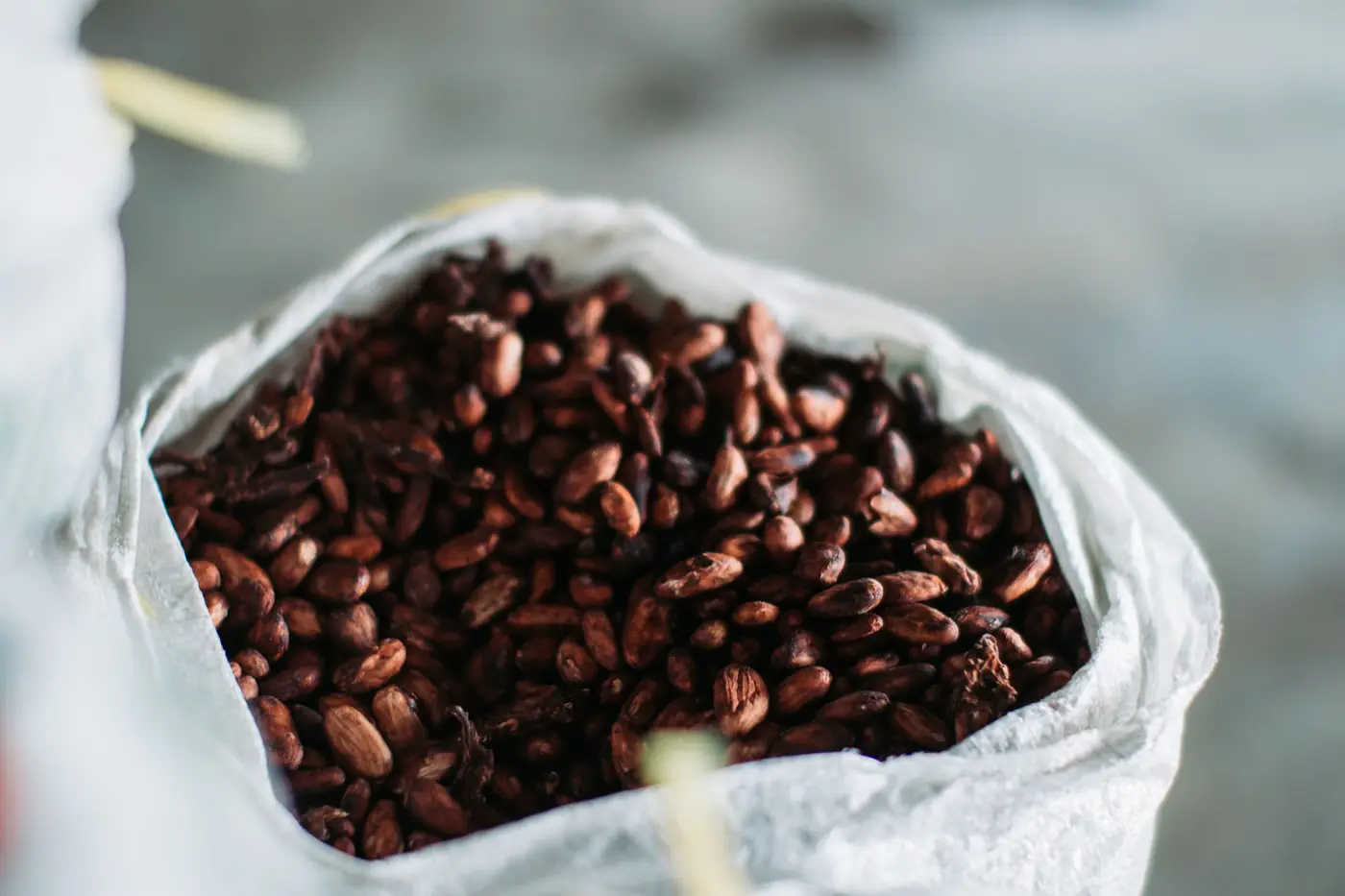
The beans were fermented, dried, roasted, shelled and ground into a paste on a stone metate. The paste was mixed with water and other ingredients, such as vanilla or flowers, then poured from a height between two vessels to raise a thick foam. The foam was prized, and drinkers judged quality partly by how it looked and smelled.
Was cacao really used as money?
Yes. Cacao beans worked as currency in Mesoamerica, and the practice continued into the colonial period. A Spanish-era record from 1545 lists prices in beans: one bean for a large tomato, about 30 for a small rabbit, and 100 for a turkey hen. People even made counterfeit beans out of wax, amaranth dough or pieces of avocado pit. The Aztecs, further north, demanded cacao as tribute from the peoples they conquered.
This raises a question for the Yucatán Peninsula: its climate is too dry for cacao to grow easily. Research led by Brigham Young University offered an answer. The team tested soil from 11 sinkholes in the peninsula and found chemical traces of cacao in 9 of them, including one near Cobá in Quintana Roo dated roughly 1000 to 1400 AD. The researchers suggest that the humid, shaded microclimate of sinkholes let the Maya grow cacao there. As lead researcher Richard Terry put it, the sinkholes "were a place where the money could be grown and controlled."
If you want to understand those sinkholes better, read how cenotes were formed and our guide to the types of cenotes.
How did chocolate reach Europe?
- 1502: On Columbus's fourth voyage, his crew met a large Maya trading canoe in the Gulf of Honduras carrying cacao beans. The Europeans noticed the traders valued the beans but did not know what they were for.
- 1519–1520: Hernán Cortés and his men saw chocolate served at the court of Moctezuma II in Tenochtitlan.
- 1544: The earliest documented chocolate at the Spanish court came with a delegation of Q'eqchi' Maya nobles, brought to Spain by Dominican friars.
- 1585: The first recorded official shipment of cacao arrived in Spain.
The Spanish adapted the drink to their taste, often sweetening it, adding familiar spices and serving it warm. From Spain it spread to Italy and France in the 17th century, and it reached England around 1657, about the same time as tea and coffee.
Is cacao still grown in the Yucatán Peninsula?
Only on a small scale. Almost all of Mexico's cacao comes from two states further south: Tabasco produces about two-thirds and Chiapas about one-third, according to national figures reported by El Universal.
What you will find around Cancún and the Riviera Maya are chocolate shops, small museums and workshops where you can grind roasted beans, taste cacao drinks and learn about the history. Offerings and prices change, so check reviews and details before you go. For gifts, our guide to authentic souvenirs in Cancún covers chocolate and other local products.
How to judge "ceremonial cacao" and chocolate claims
You will see many products and experiences labeled "Maya" or "ceremonial." A few points help separate quality from marketing:
- "Ceremonial cacao" has no official definition. There is no certification or standard behind the term. It usually means minimally processed cacao paste, but the label alone guarantees nothing.
- Modern cacao ceremonies are modern. The Maya used cacao in rituals for thousands of years, but today's meditation-circle format took shape in the early 2000s around Lake Atitlán in Guatemala. It can be a pleasant experience; just don't expect it to be an ancient rite.
- Ask where the beans come from. Good makers name the region, farm or cooperative. Mexican cacao will usually be from Tabasco or Chiapas.
- Read the ingredients. Quality chocolate lists cacao (or cocoa mass), cacao butter and sugar first. Vegetable fats and long ingredient lists are a sign of a lower-grade product.
- Respect living culture. The Maya are millions of people today, not a lost civilization. If an experience is led by Maya hosts, it is fair to ask how the community benefits. Our guide to visiting Maya communities responsibly goes deeper.
See the land where cacao once grew
The jungle and sinkholes around the Ruta de los Cenotes, near Puerto Morelos, are part of the same limestone landscape the BYU researchers studied. On our Cenote Tour you spend about three hours at a jungle cenote with a Maya snack, and you can ask your guide about the plants and history of the area. For more Yucatecan flavors, see our Yucatecan food guide.
Frequently asked questions
Did the Maya invent chocolate?
Not exactly. Cacao was first domesticated in South America about 5,300 years ago, and cacao drinks appear in Mesoamerica before the Maya. The Maya developed it into an important drink, wrote about it and used it as currency.
What does kakaw mean?
Kakaw is the Maya word for cacao. It appears in hieroglyphs on Classic-period drinking vessels, such as the one found at Río Azul, Guatemala.
Did the Maya eat chocolate bars?
No. They drank cacao as a foamy, unsweetened or lightly flavored beverage. Solid, sweetened chocolate developed later, after cacao reached Europe and colonial kitchens.
Is ceremonial cacao an ancient Maya tradition?
Cacao rituals are ancient, but the modern "cacao ceremony" format dates from the early 2000s. The term "ceremonial cacao" is not regulated.
Explore the jungle near Cancún
ATV, ziplines, a cenote swim and a tequila tasting on the Ruta de los Cenotes, with pickup from Cancún.
See All ToursSources
- The Indians of the Ecuadorian Amazon were using cocoa 5,300 years ago (ScienceDaily)
- History of chocolate (Wikipedia)
- Archaeologists, Mayanists, and Hershey's collaborated to reveal this ancient vessel's secrets (Atlas Obscura)
- Researchers now know where the ancient Maya planted their sacred cacao groves (Smithsonian Magazine)
- Ceremonial cacao: magic, myths, and Mayan realities (Cocoa Runners)
- Mexico, 8th cocoa producer (El Universal)