Cancún sits in the state of Quintana Roo, but its local food is Yucatecan: the cooking of the whole Yucatán Peninsula. It is different from the tacos and moles most visitors know from other parts of Mexico. Expect achiote, sour orange where others would use lime, slow-roasted pork, black beans, pickled red onion and a side of very hot habanero.
The short version: try cochinita pibil, panuchos and salbutes, sopa de lima, poc chuc and a marquesita for dessert. Downtown Cancún, especially Mercado 28 and Parque de las Palapas, is where you will find them closest to how locals eat them. Below, each dish is explained so you can order with confidence.
What makes Yucatecan food different?
Yucatecan cuisine is a mix of Maya cooking and Spanish colonial ingredients, with later layers from the Caribbean, Europe and the Middle East. Before the Spanish arrived, deer, wild turkey and other birds were the main meats. Pork came with the Spanish, and Maya cooks quickly adapted it to their own techniques.
Three building blocks show up again and again:
- Recado: a seasoning paste of ground spices and chiles. Recado rojo is based on achiote (annatto seed) and colors cochinita pibil red. Recado negro is made with charred chiles and tortillas and gives relleno negro its black color. There are also recados for escabeche and for papadzules.
- Sour orange (naranja agria): a bitter citrus used as a marinade and in salsas, where other regions would use lime.
- Habanero: the peninsula's signature chile, usually served on the side so you can decide how much heat you want.
Cochinita pibil: the dish to try first
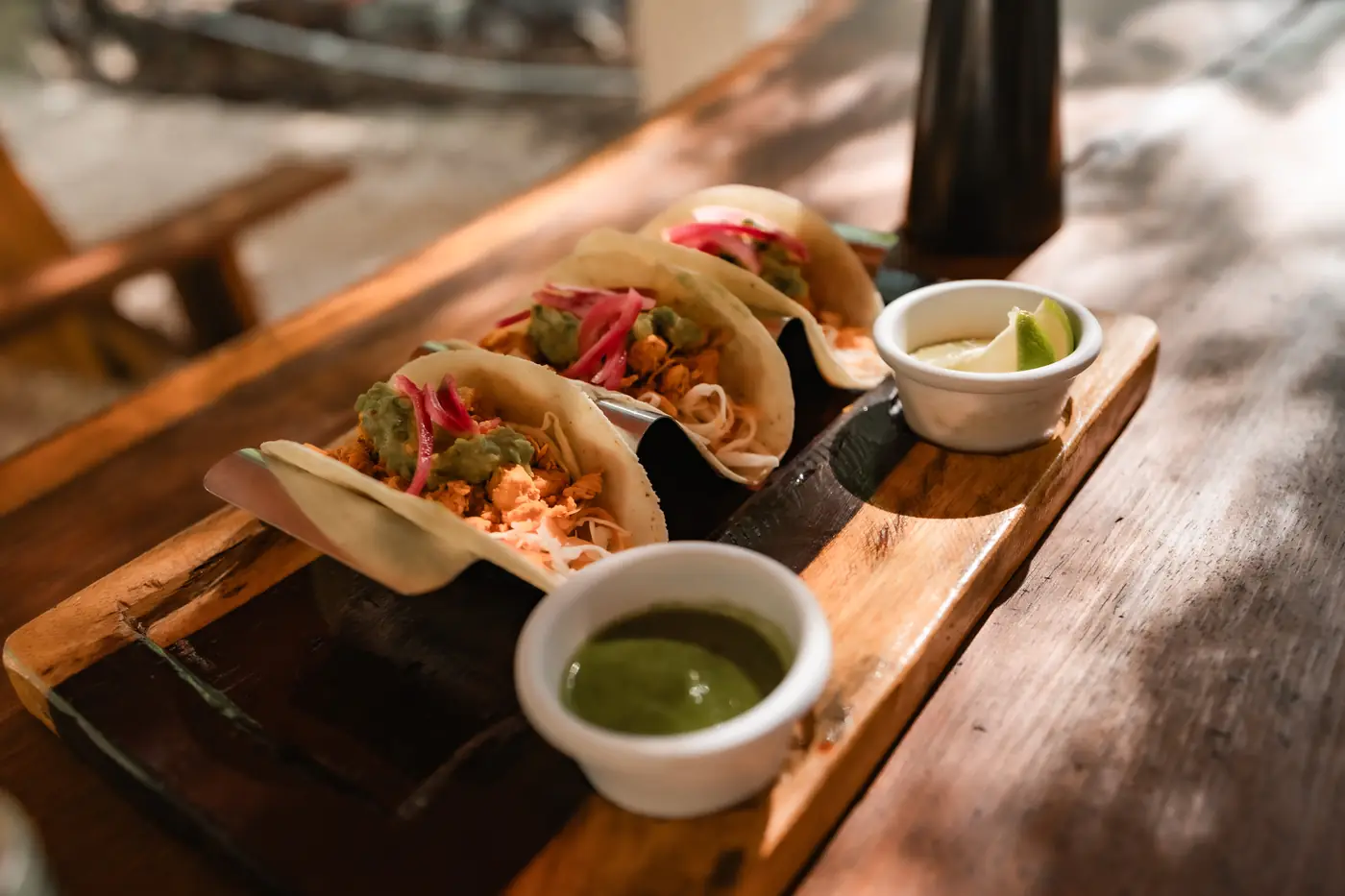
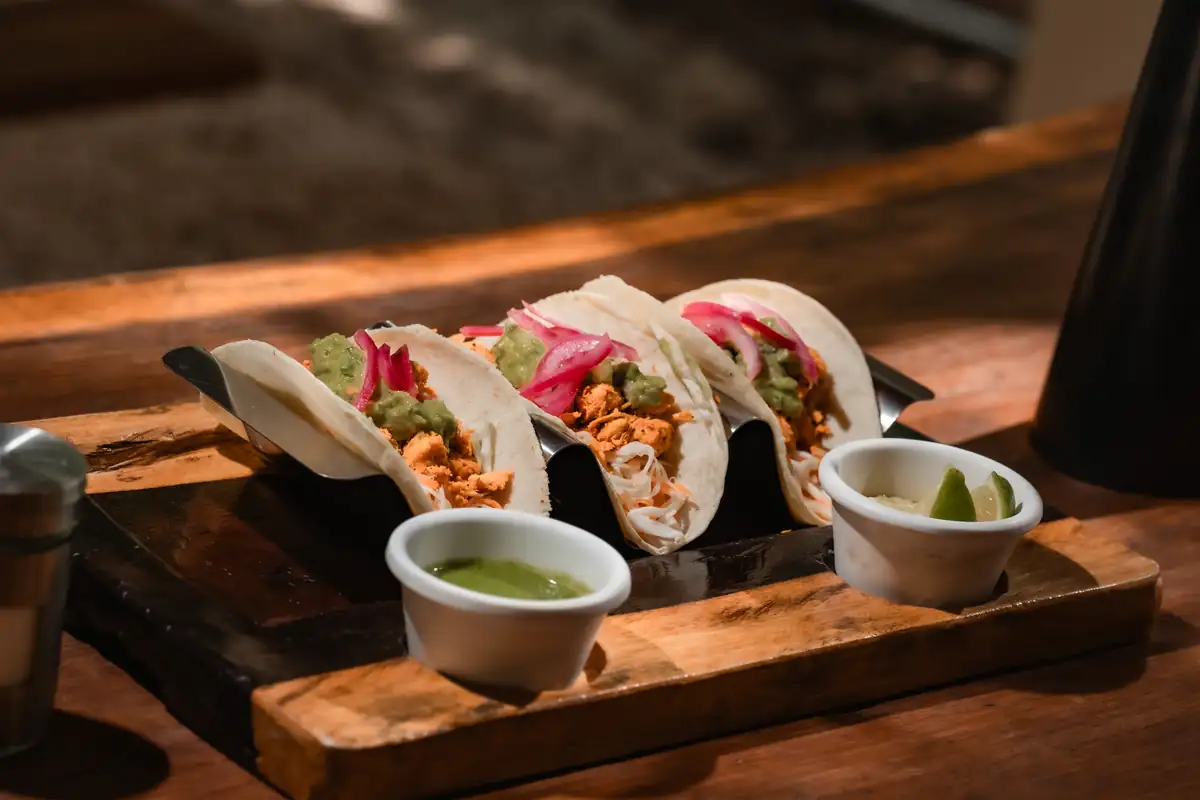
Cochinita pibil is pork marinated in achiote paste and sour orange juice, wrapped in banana leaves and slow-cooked until it falls apart. The name comes from the pib, a Yucatec Maya word for an underground oven: a pit lined with hot stones and wood, where wrapped food is buried and roasted for hours. The Maya cooked deer and birds in the pib long before pork arrived.
Today most cochinita is cooked in conventional ovens, though some cooks still use a pib. You will see it in tacos, tortas (sandwiches) and on top of panuchos. It almost always comes with pickled red onion and habanero.
Which other Yucatecan dishes should you try?
Poc chuc
Thin pork fillets marinated in sour orange juice and grilled over charcoal. It is usually served with pickled onion, rice or black beans and tortillas. The name comes from Maya and is commonly translated as "grilled over charcoal." The dish is closely associated with the town of Ticul in Yucatán state.
Sopa de lima
A light chicken (or turkey) broth seasoned with spices such as clove, cumin and oregano and finished with lima, a fragrant local citrus that is not the same as an everyday green lime. Crispy fried tortilla strips go on top. It is a good choice on a day when you want something lighter.
Panuchos and salbutes
These are among the peninsula's most popular snacks and are often sold side by side. Both start with a corn tortilla fried until it puffs, topped with shredded chicken or turkey, lettuce or cabbage, tomato, avocado and pickled onion. The difference: a panucho is stuffed with refried black beans before frying and comes out crispier, while a salbute has no beans and is softer.
Papadzules
Rolled tortillas filled with chopped hard-boiled egg and covered in a sauce of ground pumpkin seeds. They are meat-free, which makes them a good pick for vegetarians. The name comes from Maya and is often translated as "food of gentlemen."
Relleno negro
Ground seasoned pork in a jet-black sauce called chilmole, made with recado negro. It looks intimidating but is smoky rather than fiery. It is an important dish during Hanal Pixán, the Maya Day of the Dead season (see our Halloween and Day of the Dead in Cancún page).
Queso relleno
A hollowed-out ball of Edam cheese (called queso de bola locally) stuffed with spiced ground pork, olives, raisins and capers, then covered with a corn-thickened sauce called k'óol and a tomato sauce. Dutch Edam reached the peninsula in the late 19th century on ships tied to the henequen (sisal) trade, and its wax coating kept it fresh in the heat. It is a rich, special-occasion dish.
Xnipek: the salsa on every table
Xnipek (also spelled xni-pec) is a fresh salsa of chopped habanero, red onion, sour orange juice and salt, sometimes with oregano or cilantro. In Maya, ni means nose and peek means dog, so the name is usually translated as "dog's nose", a joke about how your nose will sweat after eating it. Taste a little before you pour it on.
Marquesitas: the street dessert
A marquesita is a thin crepe cooked until crisp and rolled into a tube. The classic filling sounds strange but works: grated Edam cheese, often combined with something sweet like cajeta (goat's-milk caramel), condensed milk, jam or chocolate spread. Local accounts credit an ice-cream seller in Yucatán with inventing it, though they disagree about the decade. Look for marquesita carts in parks and plazas after sunset.
Did Lebanese immigrants really shape food in Yucatán?
Yes. Lebanese and Syrian immigrants began arriving in Mexico in the late 19th century, and many settled in Yucatán, entering through the port of Progreso; the first Lebanese settler there is recorded in 1879. Their most visible legacy on the peninsula is kibi (from Lebanese kibbeh): a shell of wheat dough filled with ground meat, sold by walking vendors and eaten with sour orange and habanero.
Tacos al pastor also trace back to Lebanese immigrants, who brought the vertical spit used for shawarma. However, al pastor as we know it developed in central Mexico (Puebla and Mexico City), not in Yucatán. You will find al pastor everywhere in Cancún, but kibis are the more specifically regional Lebanese-Yucatecan snack.
Where to find local food in Cancún
You can find cochinita on menus in the Hotel Zone, but for local-style food, head downtown (el centro), a short bus or taxi ride from the Hotel Zone.
- Mercado 28: a downtown market best known for handicrafts and souvenirs. Tucked between the stalls are small casual restaurants (fondas) serving Yucatecan dishes and seafood.
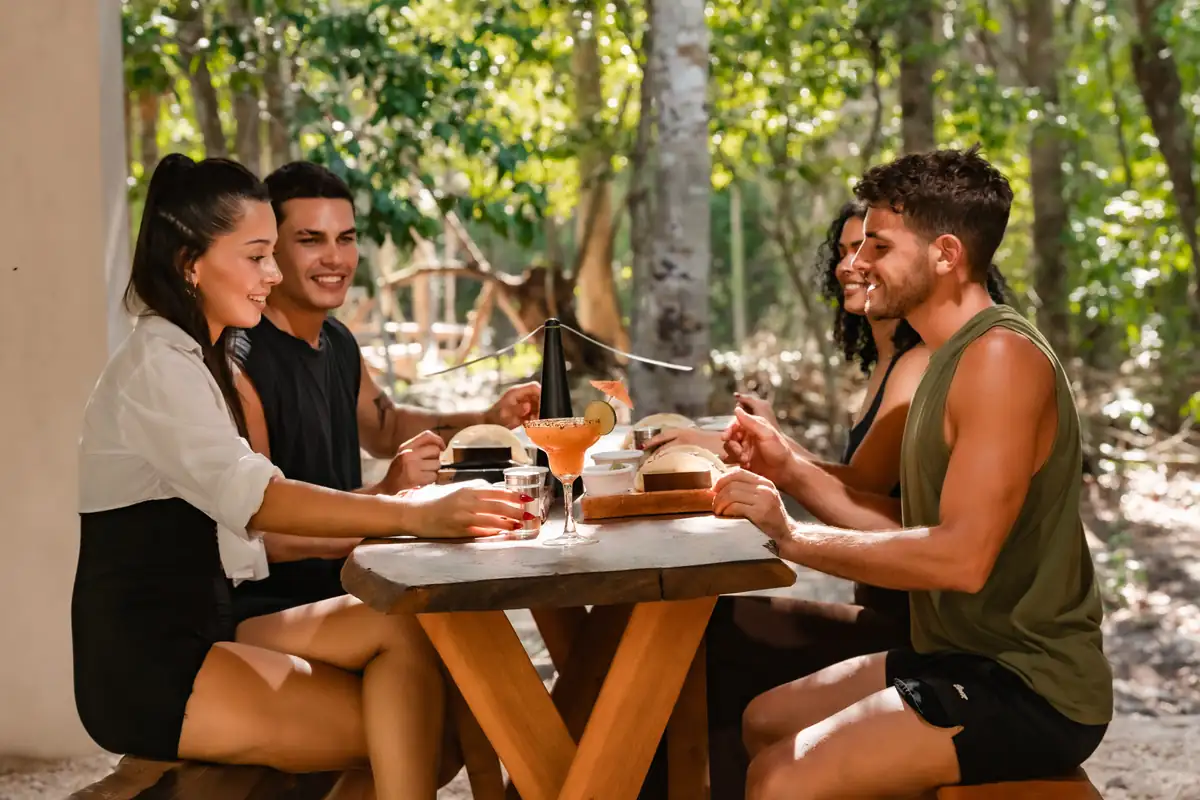
- Parque de las Palapas: a plaza between Avenida Tulum and Avenida Yaxchilán that comes alive in the evening, especially on weekends. Food stalls sell marquesitas, esquites (corn cups), panuchos, salbutes and tacos.
- Loncherías and cocinas económicas: small, casual lunch spots across downtown neighborhoods. Ask what the guiso del día (dish of the day) is.
A few practical tips:
- Prices and hours change, so check before you go, and carry some cash in pesos for small stalls.
- Ask "¿Pica?" ("Is it spicy?") if you are unsure about a salsa. Our Spanish phrases for Cancún guide has more useful lines.
Taste the peninsula beyond the plate
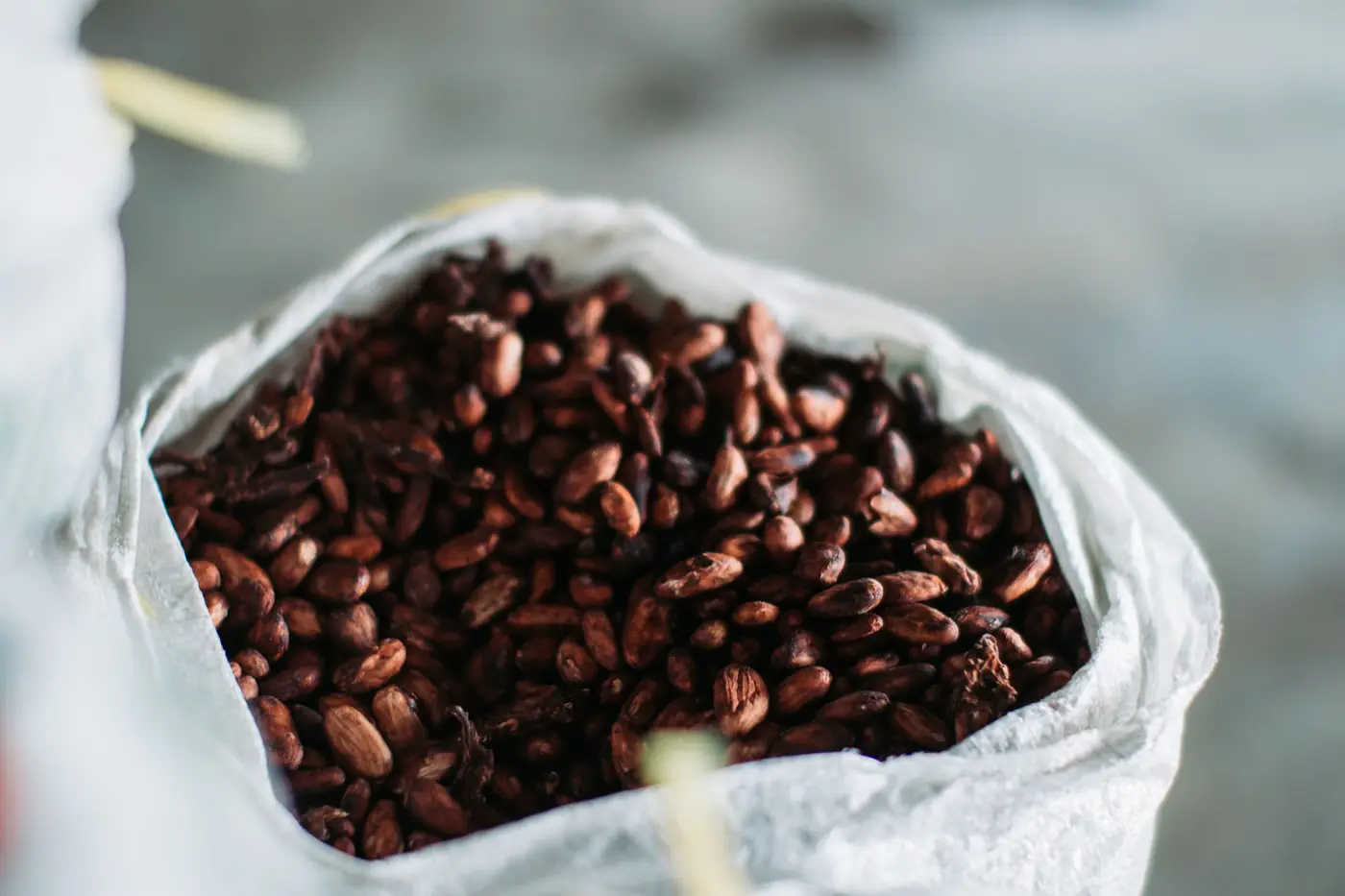
Some of the region's most interesting flavors are not dishes at all. Chocolate began as a Maya drink (read our history of cacao), honey from native stingless bees is still produced on the peninsula (Melipona bees), and there is an anise-and-honey liqueur called xtabentún.
If you join one of our jungle tours on the Ruta de los Cenotes, a Maya snack is part of the experience, along with a tequila tasting. You can see all options on our tours page.
Frequently asked questions
What is the most famous food in Cancún?
Cochinita pibil, slow-cooked pork marinated in achiote and sour orange, is the best-known Yucatecan dish. It is served in tacos, tortas and on panuchos with pickled red onion.
Is Yucatecan food very spicy?
Most dishes are not spicy on their own. The heat comes from habanero salsas such as xnipek, which are served on the side so you control how much you add.
What is the difference between panuchos and salbutes?
A panucho is stuffed with refried black beans before frying and is crispier. A salbute has no beans and is softer and puffier. The toppings are usually the same.
Where can I eat local food in downtown Cancún?
Mercado 28 has small fondas between its craft stalls, and Parque de las Palapas has evening food stalls with marquesitas, panuchos and salbutes. Small loncherías in downtown neighborhoods are another good option.
Explore the jungle near Cancún
ATV, ziplines, a cenote swim and a tequila tasting on the Ruta de los Cenotes, with pickup from Cancún.
See All ToursSources
- Gastronomía de Yucatán, platillos típicos (México Desconocido)
- Taste of Mexico: Cochinita Pibil (Mexico News Daily)
- Spice up your life with Yucatán's flavorful recados (Yucatán Today)
- Queso de bola, a matter of love (Yucatán Today)
- Mexico's early Syrian, Lebanese migrants had an impact often overlooked (Mexico News Daily)
- Mercado 28 (Wikipedia)