Chicle is the natural latex of the chicozapote, or sapodilla tree (Manilkara zapota), and for about a century it was the base of most of the world's chewing gum. Much of it came from the forests of the Yucatán Peninsula, including the jungle around Puerto Morelos. Workers called chicleros cut zigzag channels into the bark, collected the white sap and boiled it down into heavy blocks that were shipped to gum factories in the United States.
The industry shaped towns, railways and whole economies in Quintana Roo before there was a Cancún. Synthetic gum bases ended the boom, but chicle never disappeared, and in 2024 Mexico granted a geographical indication to Maya chicle from Quintana Roo.
What is chicle?
The sapodilla is a tall tropical tree native to southern Mexico and Central America. It produces a milky latex that protects it when the bark is damaged, a bit like the sap of a rubber tree. The tree also gives a sweet brown fruit, the chicozapote, which you can find in local markets in season.
The word chicle comes from Nahuatl, the language of the Aztecs. In Spanish, chicle now simply means chewing gum of any kind, which is why you'll see it on packs of synthetic gum in every Oxxo.
Did the ancient Maya chew gum?
Yes. The Maya cooked and dried sapodilla resin and chewed it; according to Smithsonian's history of gum, it was said to ease thirst and hunger. The Aztecs used chicle too, partly as a breath freshener, but they had strict social rules about it: chewing in public was considered improper for adults.
Today the tradition continues in a different form. Maya chicleros in Quintana Roo and Campeche still tap trees by hand, and their families are the reason natural chicle gum exists at all.
How did chicle become a global business?
The story usually starts in New York in the 1860s. Antonio López de Santa Anna, the former Mexican president, was living in exile on Staten Island and brought a supply of chicle with him. He hoped to sell it as a cheaper substitute for rubber and worked with an inventor named Thomas Adams. That experiment failed, but Adams noticed people liked chewing gum and started boiling and hand-rolling chicle into gum. By the late 1880s his company was making tons of it a day.
William Wrigley Jr. then turned gum into a mass product. He added sugar and flavors, launched brands like Spearmint and Juicy Fruit, and advertised on an enormous scale. During World War II, gum went into soldiers' rations, and the habit spread around the world.
All that gum needed chicle. Mexico, Guatemala and Belize supplied it, and their forest economies became heavily dependent on US buyers.
What was life like for chicleros?
Chicle work was seasonal and hard. Harvesting happens in the rainy months, roughly from late May into January, when the trees run with latex. Chicleros spent months in remote jungle camps, often working alone far from the camp during the day.
Tapping the tree
A chiclero climbed the trunk with a rope and spurs, then cut a pattern of diagonal grooves with a machete. The latex flowed down these zigzag channels into a bag or container at the base. A single tree gives roughly a quarter liter to a liter and a half, depending on its size, and has to rest for years before it can be tapped again. Older sapodilla trees in the region still carry the healed zigzag scars.
Cooking the latex
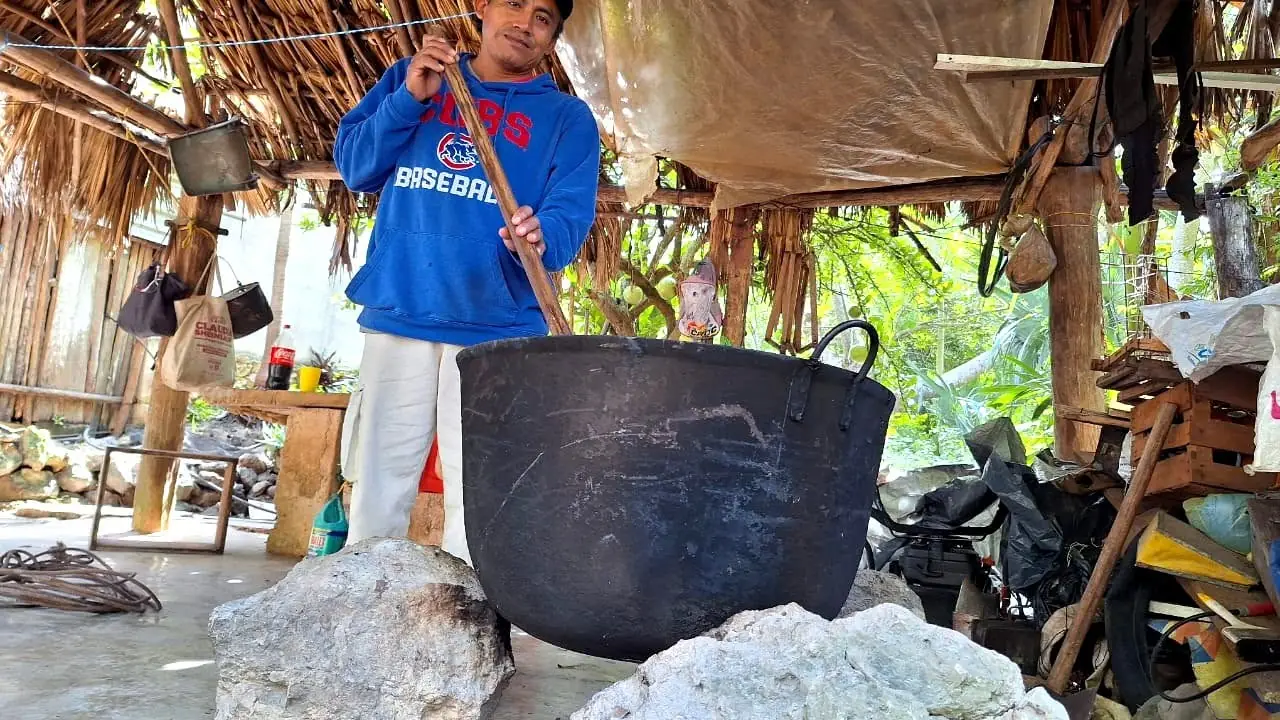
Back at camp, the latex was poured into large pots and cooked over a fire, stirred constantly until much of the water evaporated and it thickened into a sticky mass. It was then poured into wooden molds to make heavy blocks for shipping. According to producers in Felipe Carrillo Puerto, about 10 liters of latex yields only 4 to 5 kg of finished chicle, and one 11 kg block needs latex from 30 to 40 trees.
The risks
The camps were isolated. Chicleros faced snakebites, falls, malaria and a skin disease known as "chiclero's ulcer," spread by sandflies. Companies often sold workers their food and equipment on credit, which could leave them in debt by the end of the season.
How did chicle shape Quintana Roo?
Quintana Roo was a sparsely populated federal territory for much of the 20th century, and forest products, especially chicle and tropical hardwoods, were among its most important exports.
Near Puerto Morelos, the clearest example is Leona Vicario, today a town in the municipality of Puerto Morelos. It grew from a forest settlement known as Santa María (or Hacienda Santa María), which was renamed Leona Vicario in 1936 in honor of a heroine of Mexican independence. A narrow-gauge railway, about 40 km long, connected it with the coast at Puerto Morelos, and archaeologists from the Yalahau Regional Human Ecology Project have documented its remains as part of the region's chicle history. Puerto Morelos was the shipping point.
Further south, the Maya communities around Felipe Carrillo Puerto and José María Morelos organized chicle work through ejidos (community-owned lands). Mexican sources credit these chicle ejidos with keeping large areas of forest standing, since a living tree is worth more than a cleared field when you harvest its sap.
Why did the chicle boom end?
Overharvesting was one problem: by the mid-1930s, unsustainable tapping had killed a large share of Mexico's sapodilla trees. The bigger blow was chemistry. Gum makers switched to synthetic gum bases made from petroleum products, which were cheaper and more predictable. Wrigley largely stopped importing chicle from Mexico and Guatemala in the 1940s, and by 1980 the US was no longer importing Mexican chicle at all.
Most chewing gum sold today, in Mexico or anywhere else, contains no chicle.
Is chicle still harvested today?
Yes, on a much smaller scale. Cooperatives in communities like Petcacab, Dzulá and X-Yatil in Quintana Roo, plus groups in Campeche, still tap sapodilla trees. A consortium called Chicza sells organic, natural chicle gum made from their harvest.
The work is getting older, though. Local reports from 2026 describe communities where a hundred or more chicleros once worked and only a handful remain, almost all of them older men, as younger people move to tourism jobs on the coast.
The Maya chicle geographical indication
On October 24, 2024, Mexico's Institute of Industrial Property (IMPI) granted a geographical indication for Maya chicle from Quintana Roo, after a process of about seven years. It recognizes chicle from producing municipalities such as Felipe Carrillo Puerto, José María Morelos and Othón P. Blanco, and is meant to help producers sell it as a distinct, traceable product. International registration with the World Intellectual Property Organization was still pending, according to the most recent local reporting we found.
Where can you learn about chicle near Cancún?
The Jardín Botánico Dr. Alfredo Barrera Marín, just south of the Puerto Morelos turnoff on Highway 307, has a reconstructed chiclero camp along its trails, plus a Maya house and a small archaeological site. It's an easy stop on a day in Puerto Morelos. Check current hours before you go.
You can also look for natural chicle gum in local shops. It makes a good small gift, and our guide to authentic souvenirs has more ideas.
See the chicle jungle for yourself
The forest along the Ruta de los Cenotes is the same lowland jungle that chicleros once worked, and sapodilla still grows in forests across Quintana Roo. On our tours at km 18.5 you ride an ATV or horse along jungle trails, zipline over the canopy and swim in a cenote, so it's a good way to see this landscape up close. If you spot a tree with old zigzag scars, ask your guide about it. Compare options on our tours page, or read more about the region's trees in our articles on the ceiba and chechén.
Frequently asked questions
Is chewing gum still made from chicle?
Most gum today uses a synthetic base made from petroleum-derived ingredients. A small number of brands, such as Chicza, still make gum from natural chicle harvested by cooperatives in Quintana Roo and Campeche.
What tree does chicle come from?
From the chicozapote or sapodilla tree, Manilkara zapota, which grows in the forests of southern Mexico and Central America, including Quintana Roo.
What is a chiclero?
A chiclero is a worker who taps sapodilla trees for their latex. They climb the trunk, cut zigzag grooves in the bark, collect the sap and cook it down into blocks of chicle.
When did Maya chicle get a geographical indication?
IMPI granted the geographical indication for Maya chicle from Quintana Roo on October 24, 2024.
Explore the jungle near Cancún
ATV, ziplines, a cenote swim and a tequila tasting on the Ruta de los Cenotes, with pickup from Cancún.
See All ToursSources
- Chicle: A Chewy Story of the Americas (NPR)
- A Brief History of Chewing Gum (Smithsonian Magazine)
- Jungle Rails: A Historic Narrow-Gauge Railway in Quintana Roo (Trinity University)
- Actividad chiclera agoniza en Felipe Carrillo Puerto (Por Esto)
- Incumplimiento de registro internacional del chicle maya (Ruptura 360)
- Leona Vicario marks 90 years since name change (Riviera Maya News)