The Puerto Morelos reef is one of the easiest places near Cancún to snorkel a real barrier reef. The reef crest sits only about 400 to 500 meters offshore, protected inside the Puerto Morelos Reef National Park, and most snorkel spots are shallow and calm. You cannot swim out from the beach, though: you need a short boat trip with an authorized guide, a life jacket and the national park bracelet.
Our things to do in Puerto Morelos guide gives a quick overview. This article goes deeper: how the park works, what lives on the reef, the rules, the best conditions and how to plan your day.
What is the Puerto Morelos Reef National Park?
The Parque Nacional Arrecife de Puerto Morelos was decreed on February 2, 1998, to protect a stretch of reef in front of the town from the rapid tourism development along the coast. It covers about 9,066 hectares of reef, reef lagoon, seagrass beds and coastline, and it is also listed as a Ramsar wetland of international importance. The park is managed by Mexico's national protected areas commission, CONANP.
The reef is part of the Mesoamerican Reef, the second-longest reef system in the world after Australia's Great Barrier Reef. It runs for more than 1,000 kilometers along the coasts of Mexico, Belize, Guatemala and Honduras, starting near Isla Contoy at the northern tip of the Yucatán Peninsula.
How close is the reef to the shore?
Very close. Between the beach and the reef crest there is a shallow lagoon with turtle-grass meadows, typically 2 to 4 meters (6 to 12 feet) deep. The reef itself starts about 400 to 500 meters out. That short distance means boat rides to the snorkel spots are quick.
Even so, swimming from the beach to the reef is not allowed. Boats cross the lagoon, and the park requires visitors to go with authorized tour operators.
What will you see on the reef?
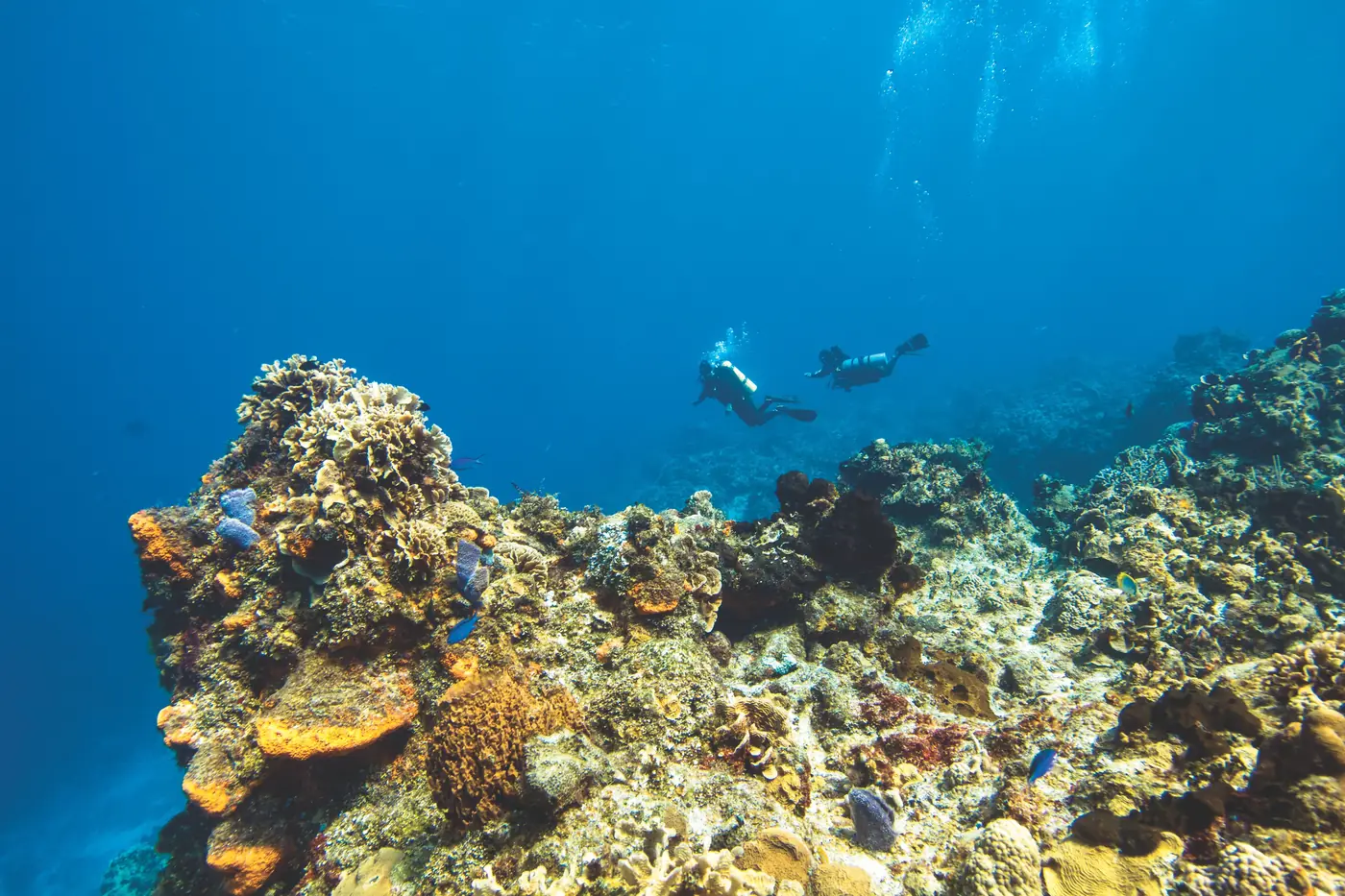
Nearly 700 species of animals have been documented in the reef ecosystem. On a typical snorkel you may see:
- Corals: elkhorn and staghorn corals (branching species that look like antlers), plus large brain corals and star corals.
- Reef fish: queen and French angelfish, parrotfish, sergeant majors, French grunts, blue tangs and great barracudas, which are common even in shallow water.
- Rays: southern stingrays resting on the sand and, with luck, spotted eagle rays gliding past.
- Sea turtles: green turtles feed on the seagrass in the lagoon, and loggerheads also use the area. Turtles nest on the area's beaches from about May to October.
- Occasional visitors: nurse sharks and, rarely, West Indian manatees.
The reef is recovering from a recent blow
In July 2018, researchers documented a severe outbreak of stony coral tissue loss disease on a reef near Puerto Morelos, the first in the Mexican Caribbean. Within about a year it had spread along most of the roughly 400 km of coast, killing many colonies of susceptible species such as brain and pillar corals. Local groups have been restoring the reef by growing and transplanting corals. This history is one more reason to follow the park's rules carefully.
What are the rules for snorkeling in the park?
Rules exist to protect the reef and to keep you safe. Expect the following:
- Go only with an authorized operator. Licensed boats and guides know the permitted snorkel zones and use mooring buoys instead of anchors, which would damage the coral.
- Wear the park bracelet. Every visitor pays a national park fee and receives a wristband. Many tours include it; ask when you book. The amount can change, so check before you go.
- Wear a life jacket. It is mandatory on boat tours. It also keeps you floating at the surface, well away from the coral.
- Don't touch or stand on the coral. Coral is a colony of living animals, and a touch or a kick from a fin can damage it.
- Skip sunscreen in the water if you can. The park runs a "zero sunblock" campaign and asks visitors not to use sunscreen or tanning lotion when entering the water. Wear a rash guard or long-sleeved swim shirt and a hat on the boat. If you must use something, choose a biodegradable mineral product and apply it well before getting in.
- No fishing, spearguns or nets, and don't take shells, coral or anything else from the park.
- Stay within the marked areas and listen to your guide.
When is the best time to snorkel?
Snorkeling is possible year-round, but conditions vary:
- Dry season (roughly November to April) usually brings the best visibility and less rain, though windy, choppy days still happen.
- Rainy season (roughly May to October) brings afternoon showers, so morning trips tend to be calmer. It overlaps with hurricane season; see our hurricane season guide.
- Time of day: mornings are generally the best bet, with calmer water and better light.
Boats do not go out when the sea is too rough, and operators may reschedule on short notice. Build some flexibility into your plans.
What about sargassum?
Sargassum seaweed reaches the beaches of the Mexican Caribbean in amounts that vary a lot from season to season and from week to week. On heavy days it can make the beach and the water near shore less pleasant, so ask your operator about current conditions. Our sargassum season guide explains when it arrives and what to do.
How to combine the reef with the jungle
Puerto Morelos sits right at the start of the Ruta de los Cenotes, the road that leads inland into the jungle. That makes it easy to pair the sea and the forest during your trip: snorkel the reef one day and head inland on another, so you don't have to rush either.
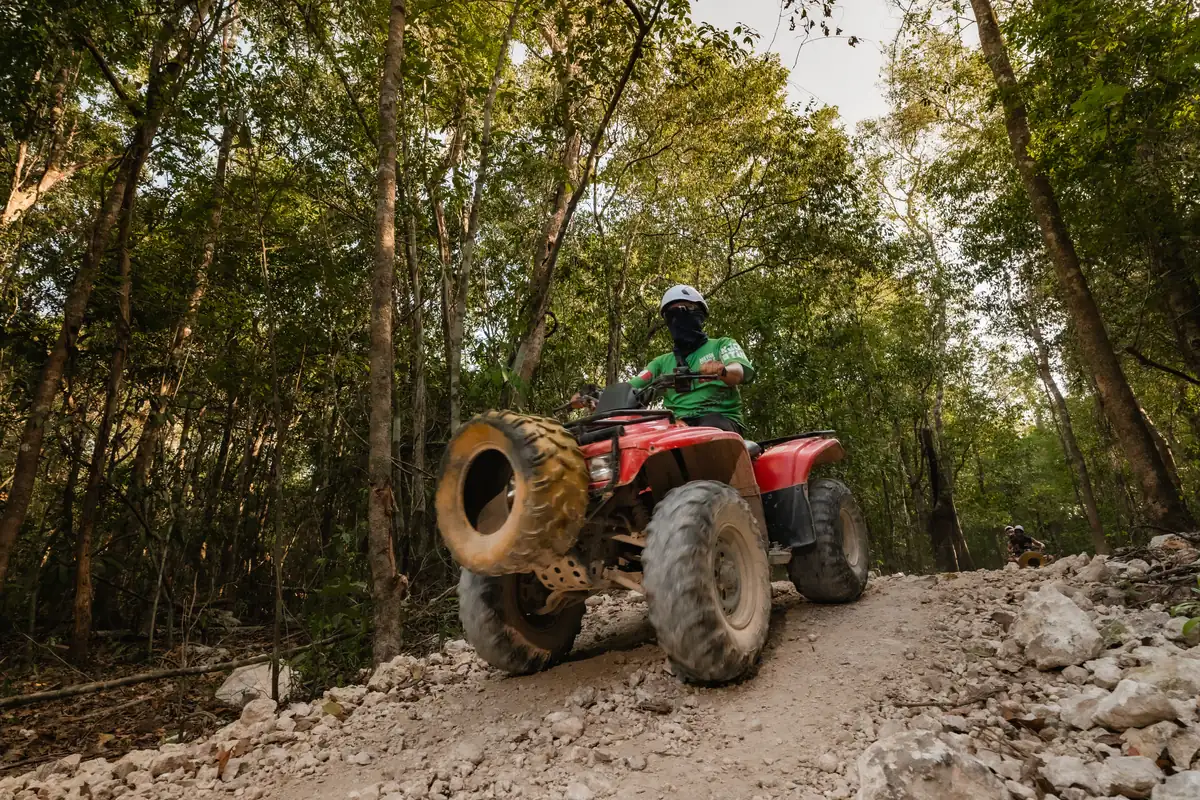
Our park is at km 18.5 of the Ruta de los Cenotes, and our tours last about four hours, with pickup from hotels in Puerto Morelos and Cancún. If you want to do both on the same day, message us first to check which departure times are available. If you want to stay in the water, the Cenote Tour gives you about three hours at a jungle cenote. If you want more action, the ATV, zipline and cenote tour adds four ziplines and a 30-minute ATV ride. Remember that only biodegradable sunscreen is allowed in the cenote too.
Curious about life on land? Our guide to jungle animals near Cancún covers what you might see inland.
Frequently asked questions
Can you snorkel the Puerto Morelos reef from the beach?
No. Swimming from the beach to the reef is not allowed. You need to go with an authorized boat operator, wear a life jacket and pay the national park fee.
How deep is the water at the Puerto Morelos reef?
The lagoon between the beach and the reef is generally 2 to 4 meters deep, and most snorkel spots on the reef are shallow, with maximum depths of around 6 meters.
Can I see sea turtles in Puerto Morelos?
Often, yes. Green turtles feed on the seagrass in the lagoon, though sightings are never guaranteed. Keep your distance and never touch or chase them.
Is the Puerto Morelos reef good for beginners?
It can be, on calm days. The water is shallow and life jackets are mandatory, but waves and currents vary, so beginners should choose calm mornings, stay close to the guide and tell the operator about their swimming level.
Explore the jungle near Cancún
ATV, ziplines, a cenote swim and a tequila tasting on the Ruta de los Cenotes, with pickup from Cancún.
See All ToursSources
- Arrecife de Puerto Morelos (International Parks)
- Parque Nacional Arrecife de Puerto Morelos (Ramsar Sites Information Service)
- Mesoamerican Barrier Reef System (Wikipedia)
- A rapid spread of the stony coral tissue loss disease outbreak in the Mexican Caribbean (PeerJ)
- Snorkeling in Puerto Morelos (Snorkeling Report)
- Puerto Morelos National Park "zero sunblock" campaign (Riviera Maya News)